The difference between 432Hz and 440Hz is essentially a slight shift in pitch, but it carries a heavy load of historical debate, musical theory, and “new age” philosophy.
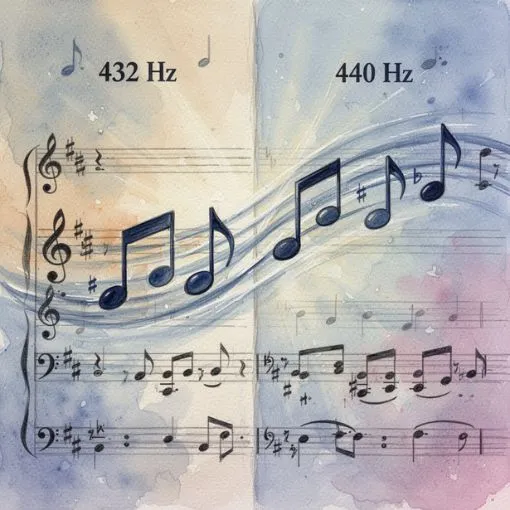
While they are both the note A4 (the A above middle C), they represent two different “standard” starting points for tuning an entire orchestra or instrument.
1. The Physical Difference: Pitch and Wavelength
Technically, frequency is the number of vibrations per second.
- 440Hz: The instrument or air column vibrates 440 times per second. This is the current International Standard (ISO 16).
- 432Hz: The vibrations are slightly slower at 432 times per second.
In musical terms, 432Hz is about 31.77 cents flatter than 440Hz. To the average ear, 432Hz sounds like a “lower” or “deeper” version of the same note. If you played them side-by-side, 432Hz would sound slightly “out of tune” compared to the modern music you hear on the radio.
2. The Subjective Experience: “The Vibe”
Because 432Hz is slightly lower, it changes the harmonic resonance of the instrument. Many musicians and listeners describe the differences qualitatively:
| Feature | 440Hz (Standard) | 432Hz (Alternative) |
| Perception | Bright, energetic, “forward” | Warm, mellow, “centered” |
| Feel | High-tension, cerebral | Relaxed, grounded |
| Common Use | Modern Pop, Jazz, Orchestral | Meditation, Sound Healing, Folk |
3. History vs. Myth (The “Why”)
This is where things get interesting (and a bit controversial).
- The Standard (440Hz): Before the 1900s, there was no standard. Some organs were tuned to 400Hz; some were 480Hz. In 1939, an international conference pushed for 440Hz to ensure that a piano in London would sound the same as a trumpet in New York.
- The Alternative (432Hz): Also known as “Verdi’s A,” it was favored by Italian composer Giuseppe Verdi because it was easier on opera singers’ voices.
Addressing the “Healing” Claims
You’ll often hear that 432Hz is the “heartbeat of the Earth” or resonates with the “Schumann Resonance.” While 432 is a “cleaner” number mathematically (it’s divisible by 2, 3, 4, 6, 8, 9, etc.), there is no peer-reviewed scientific evidence that it has mystical healing powers over 440Hz.
The “feeling” of 432Hz being better is often a result of decreased tension—since the strings on a guitar or violin are literally under less physical stress when tuned lower, the instrument resonates differently.
4. Why does it matter for you?
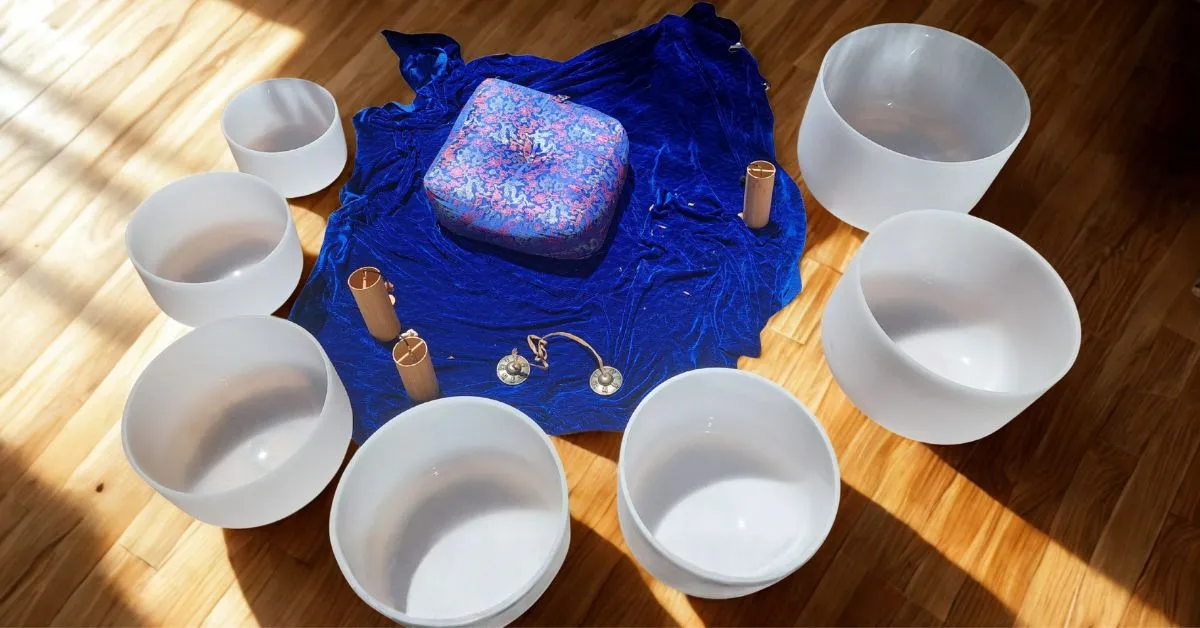
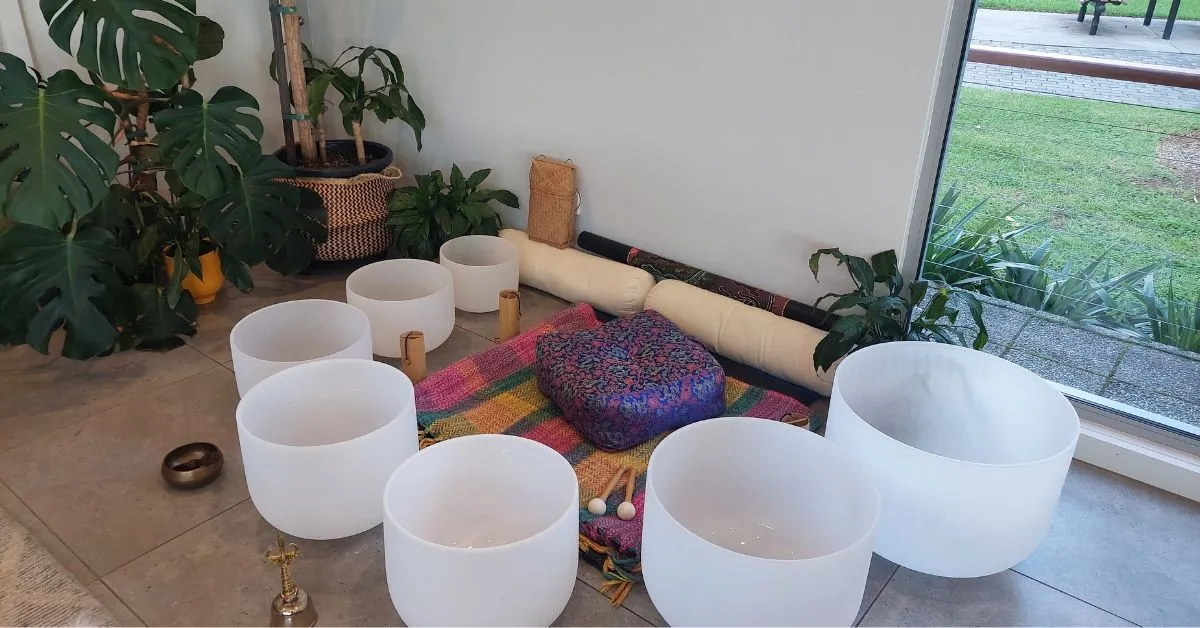
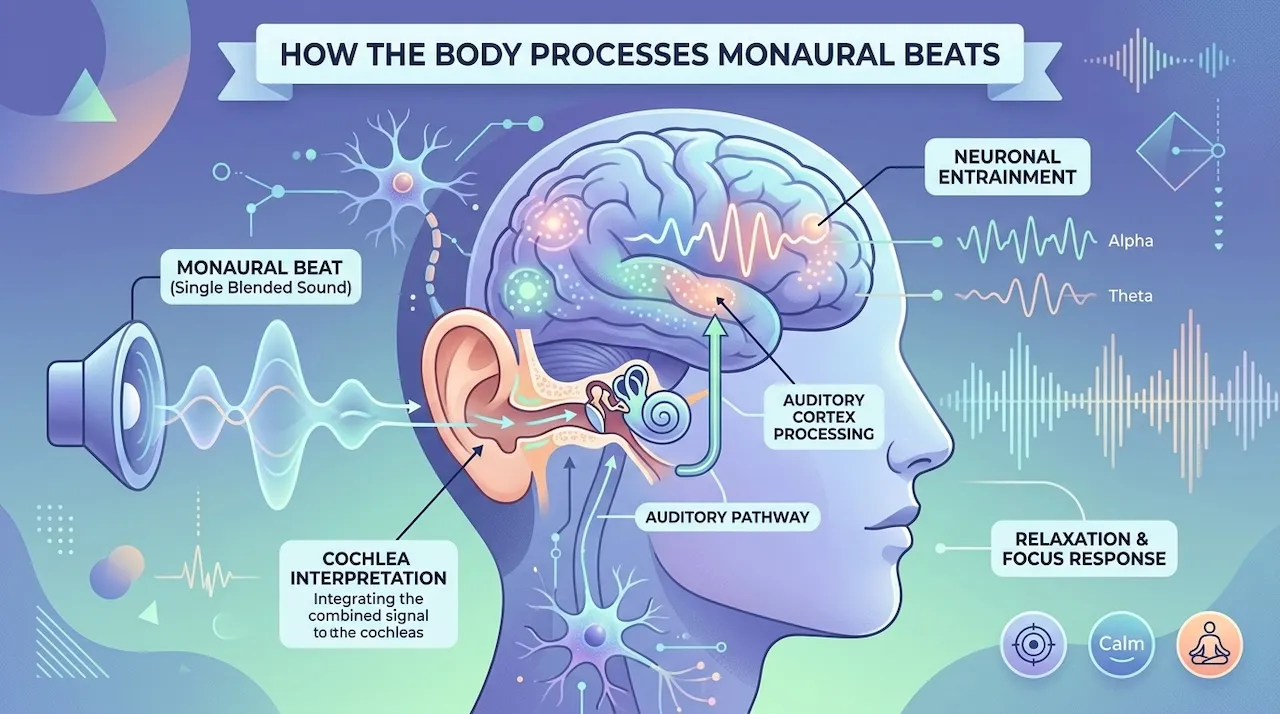
When playing two bowls together (see monaural beats), the difference creates the 8Hz Alpha frequency. If both bowls were tuned to 440Hz, I would have a clean, steady tone. By “detuning” one to 432Hz, it creates the interference pattern that allows the brain to entrain to a meditative state.
Related article
Monaural beats are physically real — created in the air, not the brain. Trevor explains how two crystal bowls produce an 8 Hz pulse and what that does to you.
Our sessions and articles share complementary wellness practices, not medical advice. If you have a health condition, please read our disclaimer.